
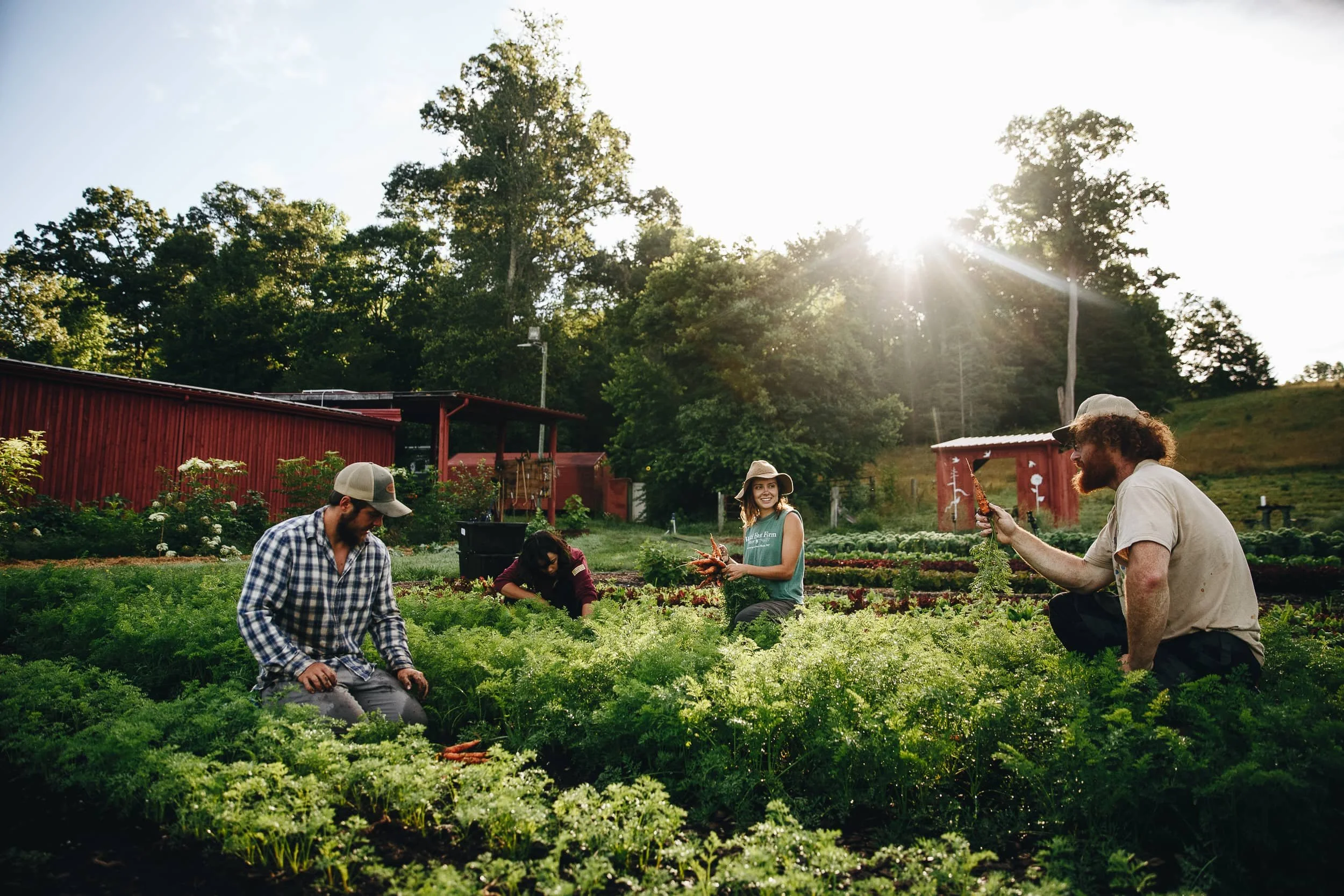
When family farms thrive, all around them springs to life.
Real food.
Healthy land.
Resilient communities.
Smaller-scale family farms grow real, nourishing food ~ not products manufactured in a factory. They care for the soil, water, pollinators, and wildlife around them in ways that industrial operations simply can't. They keep wealth circulating in local economies. And they hold communities together, giving a region the capacity to feed and care for itself.
Each family farm is part of a living web the whole region depends on.
Yet our farmers are being asked to do more and more for less and less.
BLUE RIDGE FOODSHED COMMONS
Together with farmers and food-system partners, we're creating a regional food economy that works for family farms, rather than against them.
Even here, family farming is slipping away.
WHERE WE STAND
In Western North Carolina, we're surrounded by an abundance of local farm food. Our region is home to more than 5,000 smaller-scale family farms and is known for its farm-to-table culture.
Yet by most estimates, only 4% of the food purchased here is from local farms. Meanwhile, farm income is underwater, farmers are aging out, and farmland is vanishing.
-$1,830
median income from farming
for U.S. farm households
in 2024
58
average age of a
North Carolina farmer
(nearly 38% are 65 or older)
1.2 million
acres of NC farmland
projected to be lost by 2040
(second in the nation)
Too often, farmers have to sacrifice income, control, or having a life beyond the farm.
For many, it's all three.
WHAT’S NOT WORKING
To survive, farmers are pressured to do more: make value-added products, host farm tours, sell online. But many already work a second job just to pay the bills.
Relying on outside processors and distributors cuts into already thin margins and leaves farmers little say in how any of it is done.
Land presents challenges at both ends of a farming life. Retiring farmers often have no real option but to sell to developers, while young farmers can't afford land to get started.
It's not that farmers aren't working hard enough. It's the system that isn't working for them.
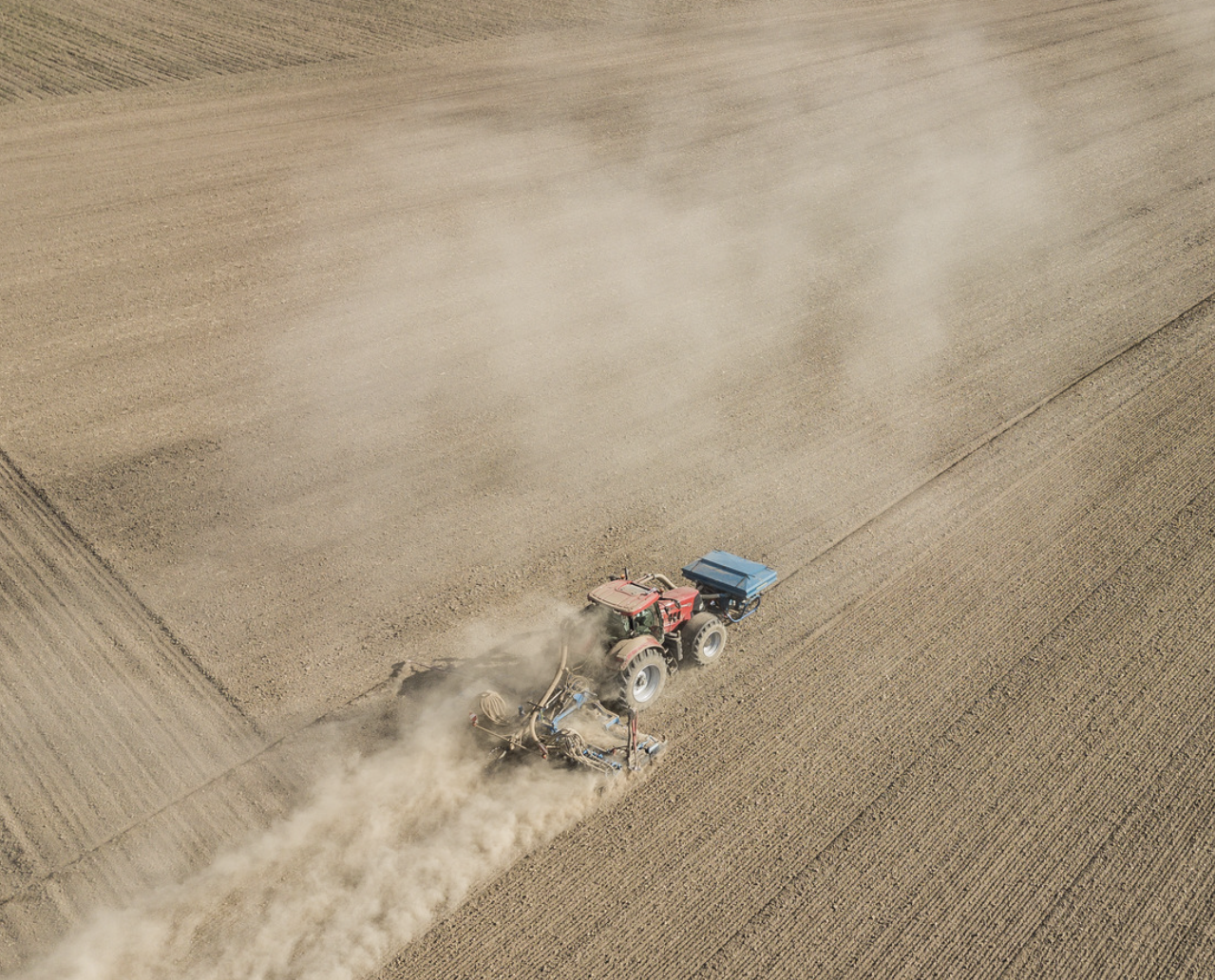
The current food system values profit over life.
WHY IT’S NOT WORKING
In an extractive economy, where profit is the highest priority, gains come at the expense of someone or something else.
When the creameries, mills, and processors that farmers depend on are controlled by the same people who profit from them, the pressure to take more and give back less is built in. Not because anyone is bad, but because that's what the system rewards.
When land is seen only for the profits it can generate, our farmland is handed over to the highest bidder rather than the best steward.
But nature works differently. In healthy living ecosystems, when one part thrives, the whole grows stronger. Well-being and abundance naturally follow when the focus is on generating more life.
So we designed a regional food ecosystem rooted in nature's wisdom ~ one that puts life back at the center.
The Commons holds shared infrastructure and land on behalf of everyone it serves.
REGIONAL FOOD ECOSYSTEM
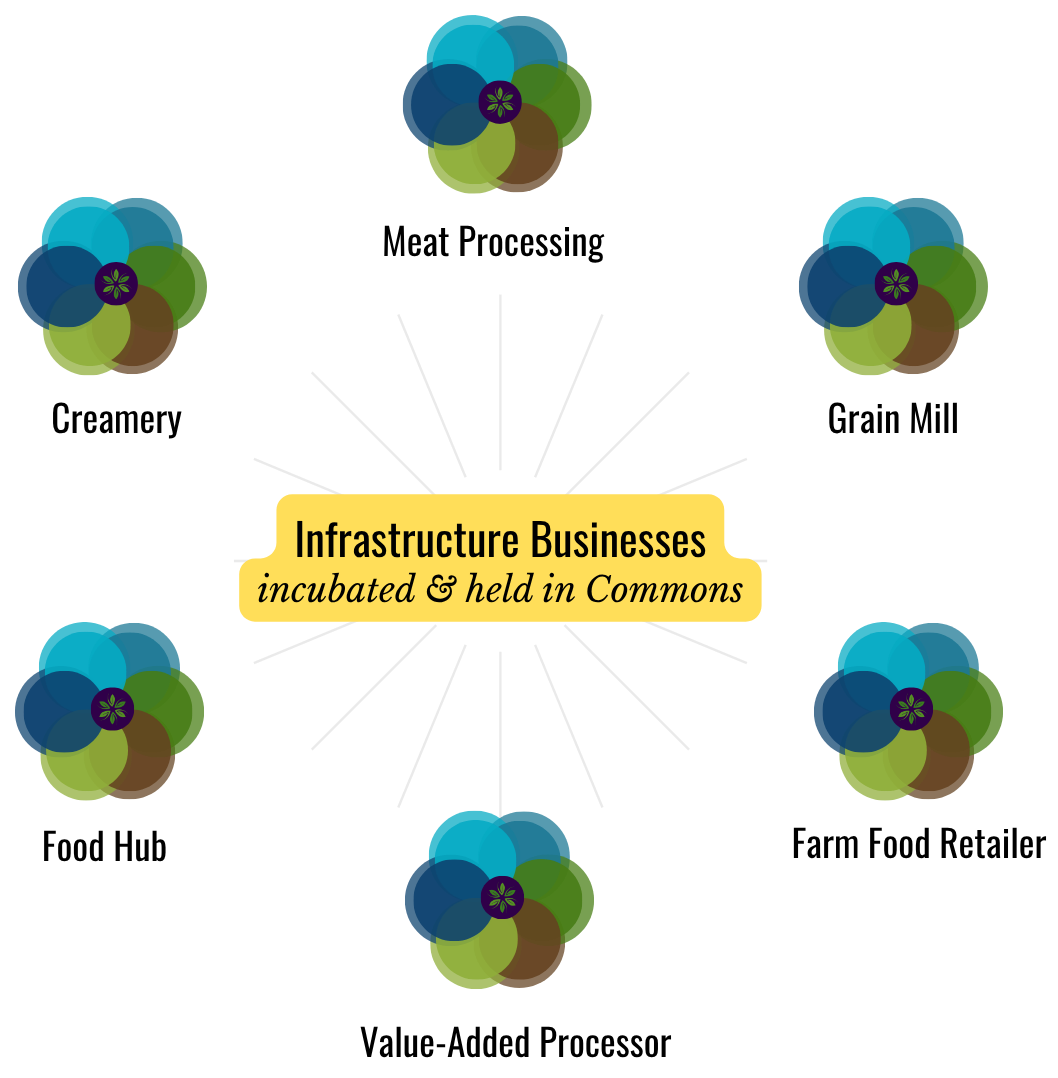
The businesses that farmers rely on are held by and for the whole foodshed ~ rather than owned and operated solely for private gain. Shared infrastructure (creameries, mills, meat processors) and support services (like distribution, insurance, and bookkeeping) are part of the Commons ecosystem, each structured as a public benefit business.
Control and profit are held separately. Patient capital supports the businesses without steering their direction.
Farmland is protected from development, preserved for regenerative farming and agroforestry.
A trust protects the mission of all Commons-held businesses and the land, ensuring they are never compromised by extraction or misaligned interests.
Farms and regions thrive together, or not at all.
WHAT BECOMES POSSIBLE
When shared infrastructure and land are held on behalf of the whole foodshed, farmers and our entire region can build something lasting together.
A seat at the table, without the risk.
Farmers and other stakeholders shape how Commons-held businesses are run, from pricing to quality standards, without carrying the capital risk or burden of owning them. Farms stay independent.
Farmers can focus on farming.
Shared processing, distribution, and support services take on work farmers have been carrying alone, freeing up time for the farm ~ and for a life beyond it.
Farmland stays in farming.
Retiring farmers gain a succession option beyond selling to a developer, and young farmers gain access to land through long-term, values-aligned leases.
Wealth stays in the foodshed.
Profits flow back into the Commons ecosystem instead of to outside shareholders, building a shared pool of capital that can respond to the needs of the foodshed as they change.
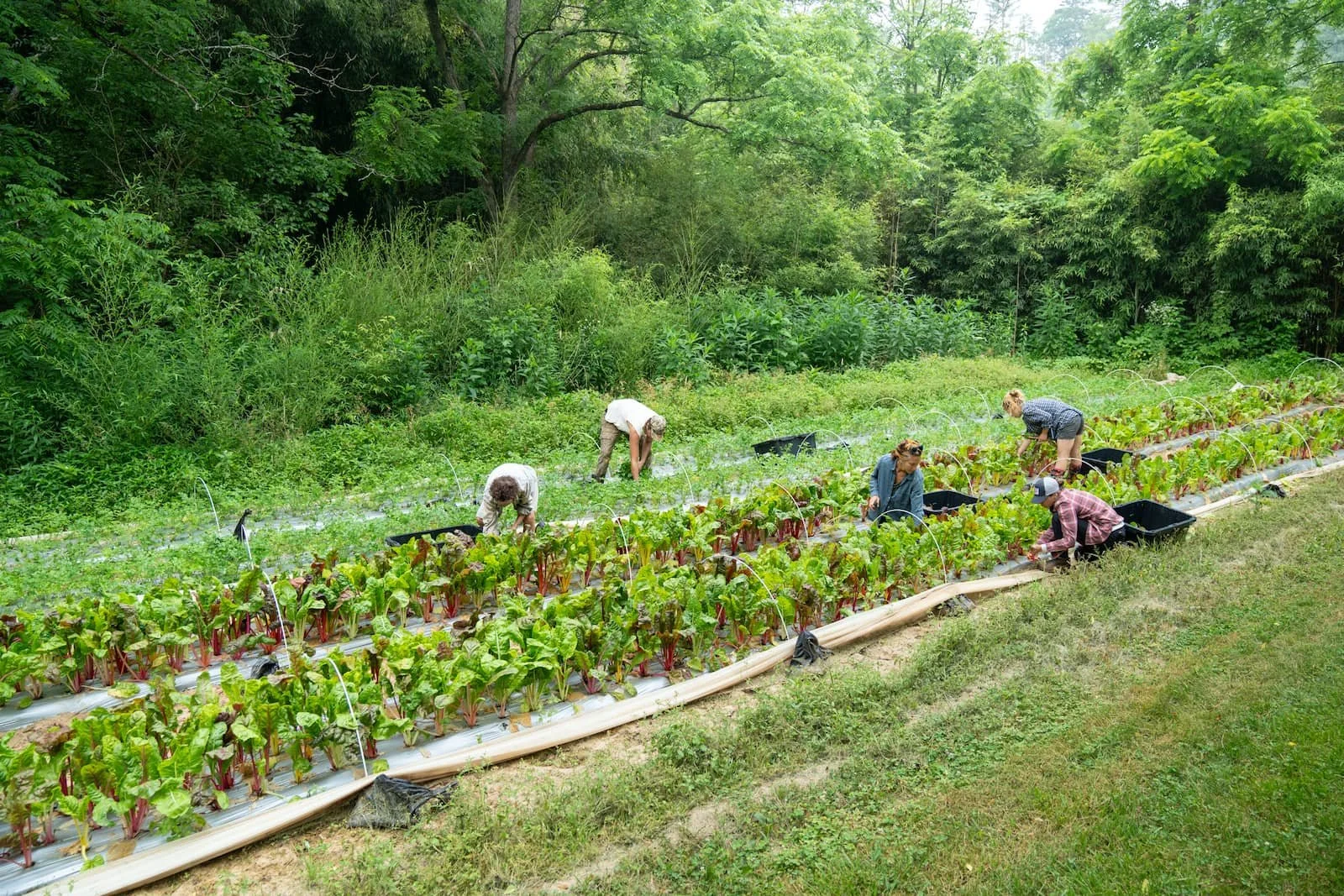
Commons-held businesses are built from the ground up by the people they serve.
FOODSHED CULTIVATOR
Each shared infrastructure business is incubated in the Foodshed Cultivator ~ a six-month venture studio where farmers and other key stakeholders come together to design the details of the business while also strengthening their relationships of trust with each other.
We’re beginning with the development of a creamery in Rutherford County, being shaped now with the region's dairy farmers.
Where would you like to begin?
CONNECT & EXPLORE
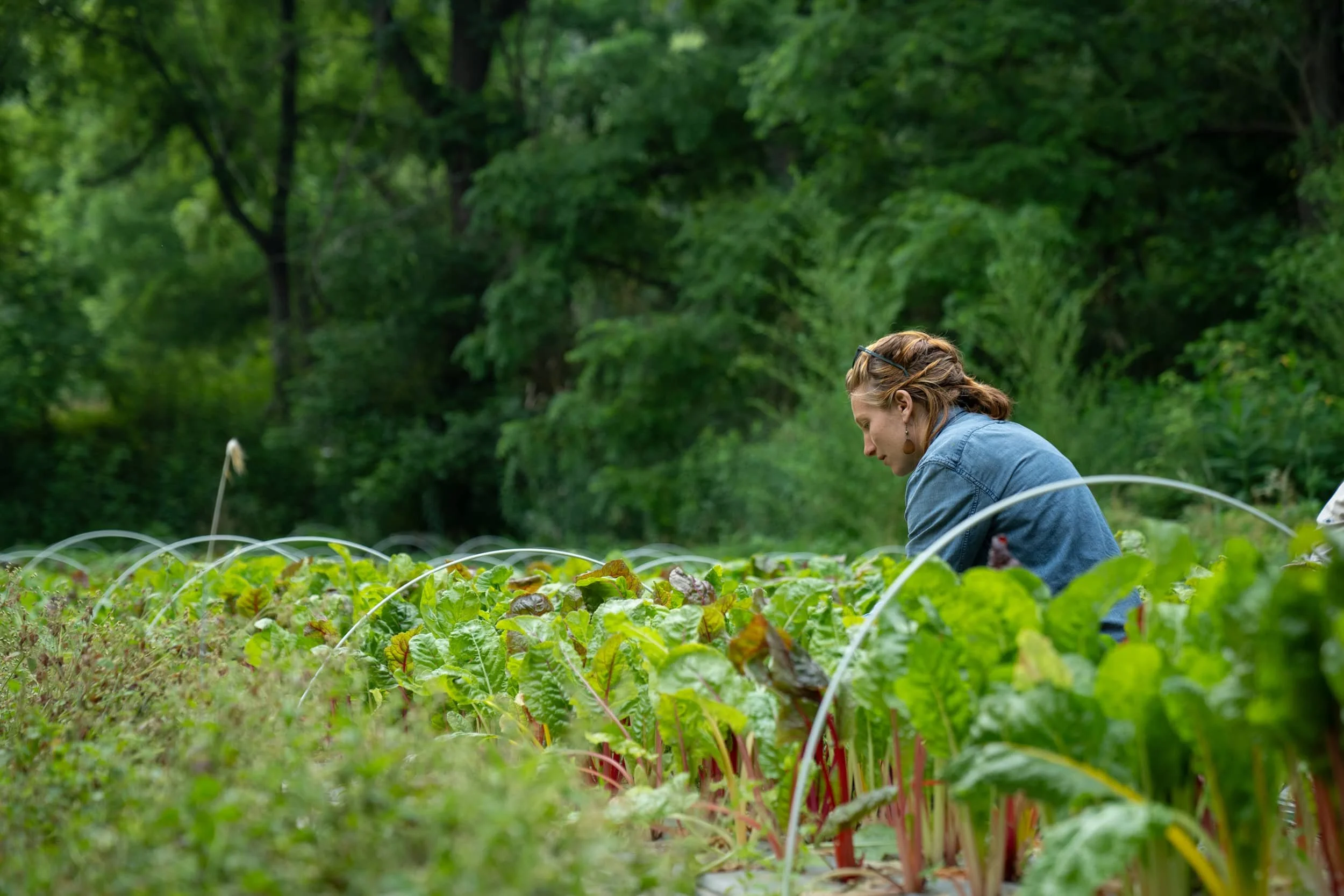
WNC FARMERS
Curious how a business or land held in the Commons could work for you? Learn more about the Foodshed Cultivator.
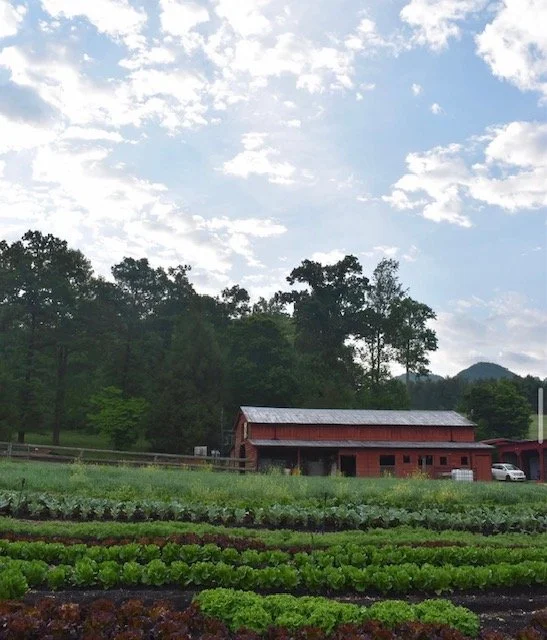
FUNDERS & SUPPORTERS
Want to join us in building a regional food ecosystem where farmers and communities flourish for generations?

FOOD-SYSTEM DESIGNERS
Are you building something similar in your region? Inspired to take an ecosystem approach? Dig into the model.